Guitar Warm-Up Routine for Focused Hands
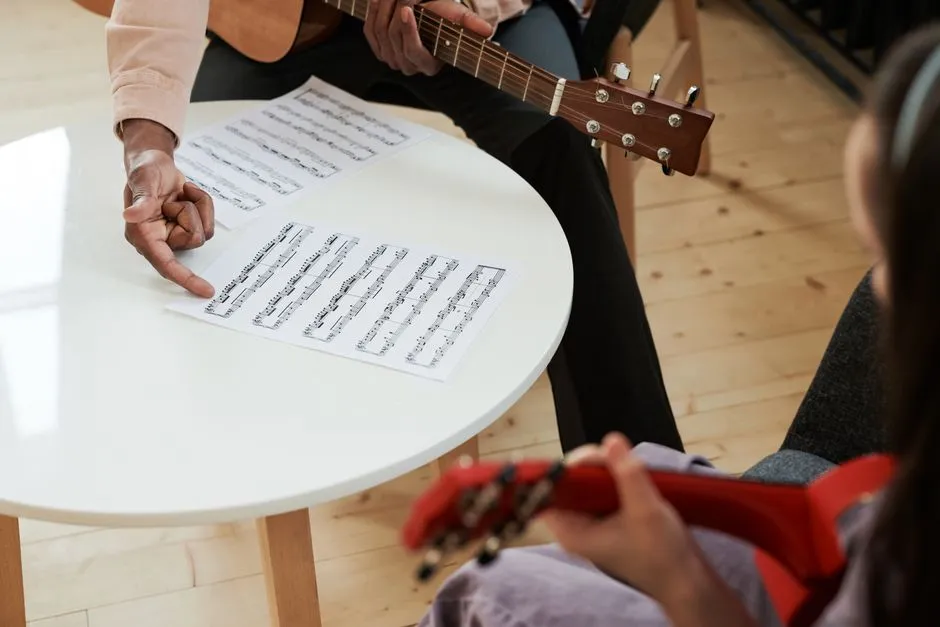
Warm up by playing easy music comfortably
A guitar warm-up should begin with relaxed, low-demand movements and gradually approach the technique you plan to practice. Use familiar chords, slow single notes, gentle rhythm, and a simplified version of the day's difficult passage. A warm-up prepares attention and coordination; it is not a test of maximum stretch, speed, or grip.
Check comfort before repetition
Support the guitar securely and choose a position that allows easy breathing and unforced shoulders, elbows, wrists, and hands. Make small adjustments rather than holding a pose because it looks conventional.
Do not treat pain, numbness, tingling, weakness, or loss of control as a training metric. Stop playing when any occur. Persistent, recurring, or concerning symptoms require assessment by a qualified clinician; a qualified guitar teacher can review technique only after the immediate health concern is addressed. Do not force a stretch or continue playing through symptoms.
Begin with easy, controlled sound
Play open strings or an easy chord. Listen for even attacks and notice whether either hand is using more force than the sound requires. Release the fretting hand between attempts.
Next, play a familiar two-chord loop or a short melody. Use a tempo at which movement remains coordinated and focus on smooth execution. If the guitar itself buzzes, frets out, or behaves unusually across normal playing, do not compensate with more hand pressure; a qualified technician can assess setup or damage.
Match the warm-up to the session
For chord work, practice easy shape releases and landings before difficult grips. For picking, use a small pattern on one string before crossing strings. For bends or vibrato, begin with ordinary fretted notes and gentle pitch movement before larger demands.
The alternate-picking guide and clean chord-change lesson both start with motions you can simplify.
Increase one demand at a time
Raise tempo, reach, coordination, or dynamic intensity separately. If you increase all four, you cannot tell which change introduced tension or error.
Use a few accurate repetitions, then pause. Shake out the hands gently without aggressive pulling. The aim is readiness, not fatigue. Stop the warm-up if it reduces coordination or creates symptoms before the focused task begins.
Include rhythm and listening
Tap a pulse, count subdivisions, or strum muted strings. This prepares timing while keeping fretting demands low. Then play the first musical target of the session at an easy tempo.
Our beginner practice routine places the warm-up inside a complete session so it does not expand indefinitely.
Know when the warm-up is done
You are ready when familiar motions feel controlled, the intended notes sound clean at an easy pace, and attention is on the music rather than physical stiffness. There is no universal number of minutes or repetitions.
On a cold day, after a long break, or before demanding material, you may progress more gradually. On another day, one familiar song may be enough. Use controlled movement as the standard: the warm-up should make the first focused task easier and must stop when symptoms occur.